Local detail
When It Stops Being a DIY Job
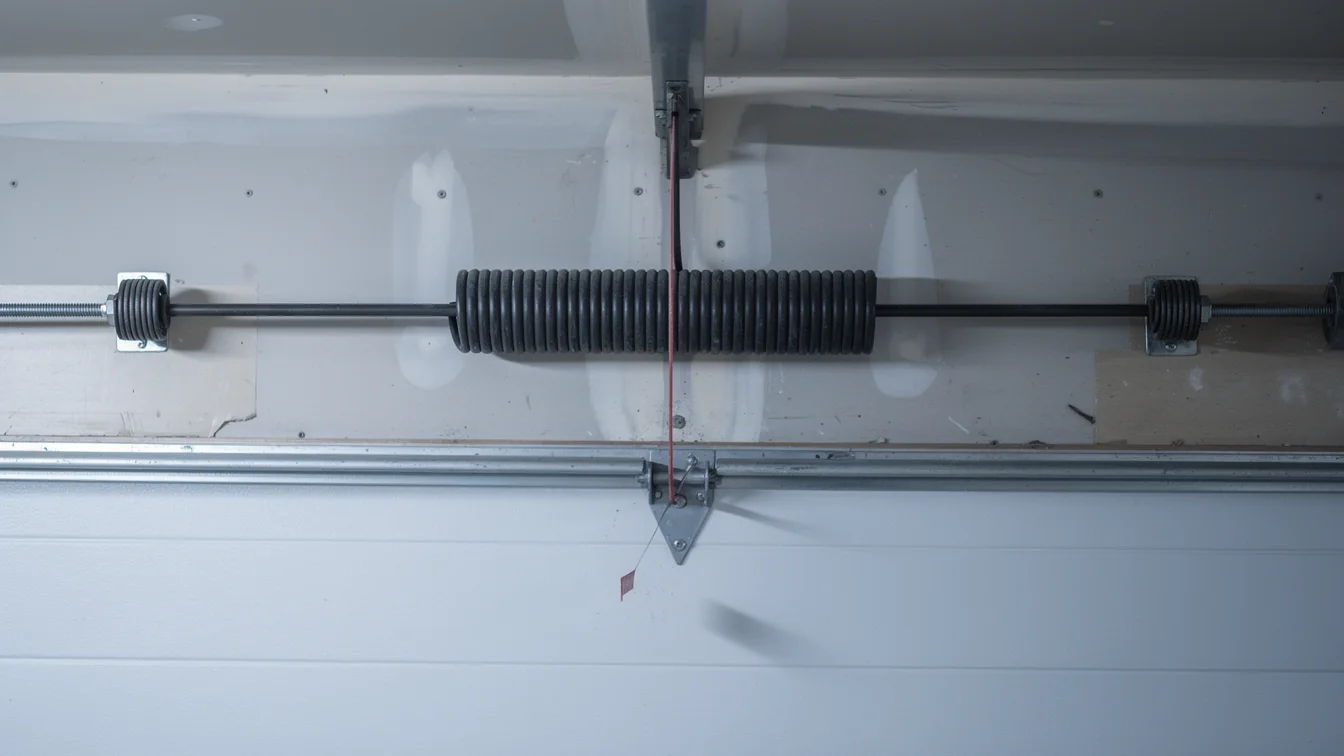
Most of the housing stock in this service area went up between 1961 and 1993, with the typical build year landing around 1982. That means a lot of the torsion springs on these doors are either original installs or a second set now also aging out. A torsion spring under tension is not a part to experiment on, cold or warm, but cold mornings raise the stakes: the steel is stiffer, the wind-up bar has less give, and a spring already fatigued from decades of cycling is more likely to let go the moment someone touches a bolt. If the door won't lift past a few inches, if one spring shows a visible gap or stretch in the coil, or if you hear a loud bang from the garage on a cold morning, that's the line. Call it in. We don't recommend homeowners unwind or wind a torsion spring themselves regardless of the weather - that advice doesn't soften just because it looks simple. A snapped cable on a door this old is often tied to a spring that failed first, so a full inspection, not just a cable swap, is usually the right call.
The area
When Waiting Is Fine
Not every noisy door is an emergency. If the door still opens and closes under its own power, lifts evenly on both sides, and the spring itself shows no visible gap or stretch, you can wait for a scheduled visit rather than an emergency call. A little surface rust on a spring coil, common on hardware installed back when this area was built out across the 1960s through the 90s, doesn't mean failure is imminent on its own. Same goes for a slight increase in noise on a cold morning: metal contracting a little is normal, and a door that's properly balanced usually settles once it's cycled a few times. What you're watching for is a change in how the door behaves, not just how it sounds. If one side looks lower than the other, or the opener strains and the chain or belt sounds different than usual, that's worth a call sooner rather than later. A single cold morning with a bit more creak than normal is not a reason to drop everything and demand a same-day technician.
What we find
The Problem
A garage door torsion spring is rated for a set number of open-close cycles, and most of them are already well past the midpoint of that count on a house built in the 1961-1993 range that this area's stock mostly falls into. Steel doesn't fail gracefully. As it fatigues, it loses tension gradually, then drops off fast, and cold temperatures accelerate that last stretch because contracted steel is less forgiving under load. This area's climate band is classified as moderate heat rather than sustained cold, which actually works against older springs in one specific way: because deep, extended freezes aren't the norm here, a sharp cold snap is a sudden swing rather than part of a long season the hardware has adjusted to, and that abrupt change is exactly when a spring near the end of its life gives out. With roughly 12,951 owner-occupied houses among 18,984 households across this service area, a meaningful share of these doors are on their original or first-replacement spring set, installed decades before anyone was thinking about cold-morning failures.
How we work
What Local Conditions Do
Calls come in from across this service area - Quartz Hill four miles out, Rosamond twelve, Littlerock and Lake Hughes both around sixteen - and the pattern holds across all of them: older torsion hardware on houses from the 1961-1993 build era, tested by whatever cold morning shows up that week. A median household income of $107,008 in this area means most owners are deciding between a spring swap and a full opener or door replacement, not stretching to afford either, and that changes the conversation we have on site. We'll tell you straight if a repair isn't worth it on a door that's otherwise failing in multiple places - patching a 1980s door with a new spring when the track and rollers are also shot just delays the same call. What cold does, practically, is move up the timeline on hardware that was already due. It doesn't create new problems on a sound door, and it won't make a spring with real service life left suddenly fail. It mostly separates springs that had another year or two left from ones that didn't. If you're not sure which category your door falls into, reach out through our site and we'll walk through it with you before anything gets scheduled.
Talk to a local pro
Garage door trouble in Lancaster?
Same-day service with honest, upfront quotes.