Local detail
When It Stops Being a DIY Job
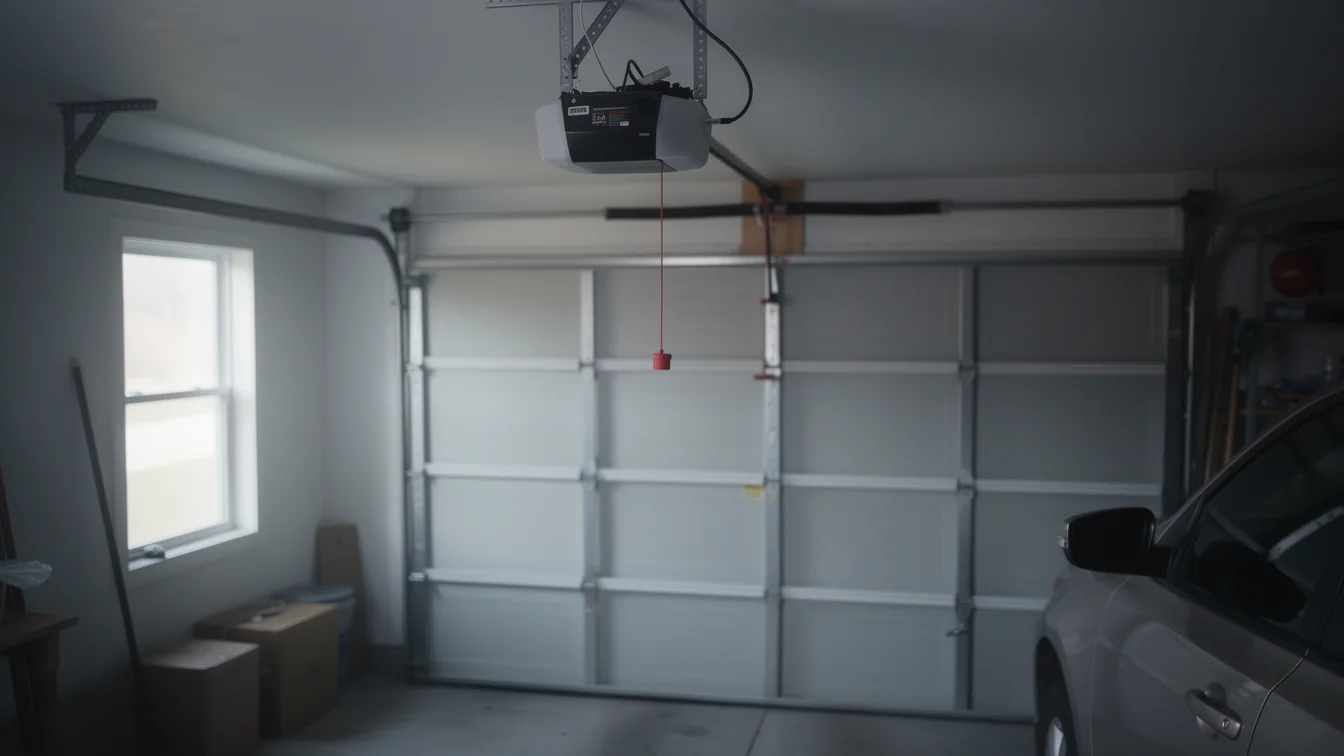
If the power comes back and your opener just sits there dark, start with the obvious: check the wall switch, check the breaker, check that the unit's still plugged in. That takes five minutes and fixes more calls than people expect. But if the opener hums and the motor spins while the door doesn't move, or if you pulled the manual release cord during the outage and now the trolley won't re-engage with the chain or belt, that's past a reset. A lot of the openers still running in homes built between 1961 and 1993 are second or third units installed in original header hardware from that era, and the bracket alignment on those older rails doesn't always tolerate someone yanking the emergency release without knowing how to re-seat it. If the logic board took a surge during the cut and the opener won't learn a remote or respond to the wall button at all, you're looking at a board replacement, not a fuse. That's a call, not a weekend project, because a door that half-cycles on a bad board can come down on something underneath it.
The area
When Waiting Is Fine
Most power cuts don't need a service call at all. If the opener's battery backup kicked in and the door still runs on remote, you're fine, just reset the clock display and move on. If there's no battery backup and the power's out, use the manual release to get the car out and don't force the opener logic through a dozen on-off cycles while the grid's unstable, that's how boards get stressed. A single short outage that resolves in under an hour almost never damages anything. With 18,984 households across the service area and a good share of them running openers original to houses from the 1980s and 90s stock, we see a predictable pattern: it's not the short blips that cause trouble, it's the repeated short-cycling during longer outages or brownouts that eventually takes out a board. One clean outage, no action needed. Three or four in a week, that's worth a look even if the door's still working.
What we find
The Problem
Lancaster sits in a moderate heat band, and summer is when the grid gets pushed hardest and when outages and brief brownouts cluster. That's also exactly when garage door openers get used the most, since nobody wants to hand-crank a 16-foot door in the heat. The houses most exposed are the ones built in that 1961-1993 window, median 1982, where the opener has likely been swapped at least once but the wall wiring, the header bracket, and sometimes the breaker circuit are original to the house. A brownout that sags voltage instead of cutting it entirely is harder on a motor than a clean outage, because the motor draws longer at lower voltage trying to finish a cycle. We see this pattern across the same nine areas, from Quartz Hill in close to Littlerock and Lake Hughes further out, where the housing age is consistent even though the distance from town center varies a lot.
How we work
What Local Conditions Do
Put the heat band and the housing age together and you get a specific failure mode: older openers on original circuits getting asked to run through the hottest, highest-demand part of the grid year after year. That's different from a region where houses are newer or the climate doesn't push summer demand the same way. With a median household income of $107,008 across the area, a battery backup unit is a realistic upgrade for most owners here, but it's worth knowing it only helps if the opener itself is a model built to accept one, a lot of older chain-drive units from the 1980s and 90s aren't. We won't sell you a backup battery for an opener that can't use it, that's a part that sits in a box. If your opener's original to a house from this build era and you've had more than one board issue, replacement is usually the better math than another repair.
Talk to a local pro
Garage door trouble in Lancaster?
Same-day service with honest, upfront quotes.